

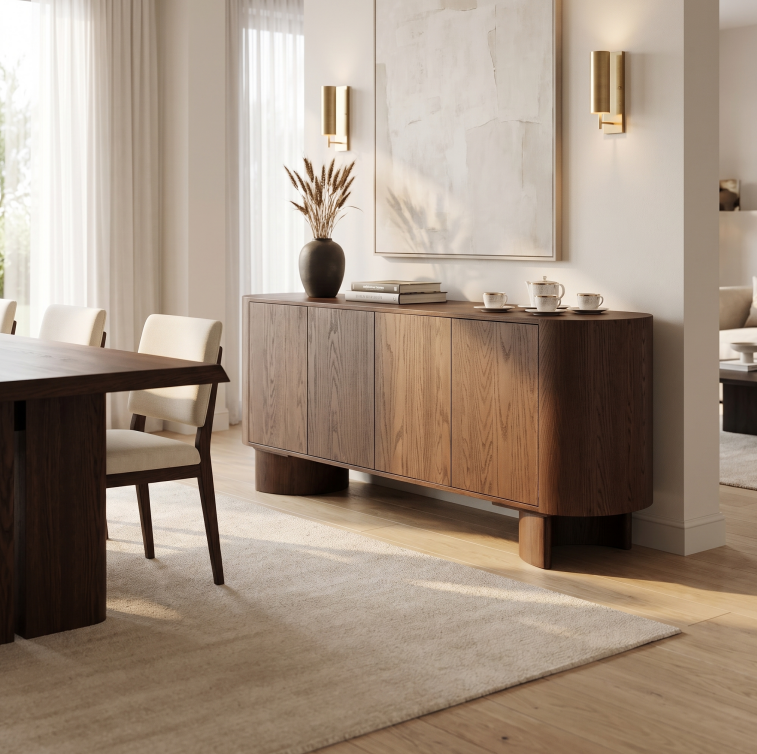
A sideboard is one of the most versatile pieces of furniture you can own. It offers storage, display space, and a surface for styling — all in one.
But many people only think of a sideboard in one context: the dining room. Against a wall, holding serving dishes and extra dinnerware.
That is a perfectly good use. But it is only the beginning.
A well-chosen sideboard can work in almost any room of your home. The key is styling it appropriately for the space. Here is how to style a sideboard for every room — and make it feel like it belongs exactly where you put it.

The Dining Room: Classic and Functional
The dining room is where the sideboard feels most at home. It serves as a serving station, extra storage, and a visual anchor for the room.
What to put on top:
-
A large ceramic or stone bowl for serving
-
A pair of candlesticks or a low vase with branches
-
A stack of dinner plates or serving platters (if space allows)
What to store inside:
-
Extra dinnerware and glassware
-
Serving bowls and platters
-
Table linens and napkins
-
Candles and matches
Styling tips:
-
Keep the surface clear enough for serving during meals
-
Use the top as a display space for pieces you use regularly
-
Place a mirror or artwork above to anchor the wall
The Living Room: Display and Storage
In the living room, a sideboard becomes a media console, a display surface, or a room divider. Its long, low profile makes it perfect for anchoring a seating area.
What to put on top:
-
A lamp or pair of lamps
-
A stack of coffee table books
-
A small plant or vase with dried branches
-
A tray holding remotes and small objects
What to store inside:
-
Board games and puzzles
-
Extra blankets and throws
-
Media equipment (if used as a console)
-
Children's toys (in baskets inside)
Styling tips:
-
Use it to define the edge of a seating area
-
Leave some surface empty for visual rest
-
Add a large piece of art above to balance the horizontal line
The Entryway: First Impressions
A sideboard in the entryway sets the tone for your entire home. It is the first piece guests see — and the last they see when they leave.
What to put on top:
-
A mirror (essential for last-minute checks)
-
A bowl or tray for keys and mail
-
A small lamp for warm lighting
-
A single decorative object — a vase, a sculpture, or a stack of books
What to store inside:
-
Umbrellas
-
Gloves and scarves (seasonal)
-
Dog leashes
-
Extra shoes (in baskets or bins)
Styling tips:
-
Keep it simple — the entryway should feel welcoming, not crowded
-
Use the mirror to reflect light and make the space feel larger
-
Add a small rug in front to define the entry zone
The Bedroom: Dressing and Storing
In the bedroom, a sideboard can replace a traditional dresser or serve as a supplementary storage piece. Its lower profile works especially well in rooms with lower ceilings or smaller footprints.
What to put on top:
-
A mirror or framed art
-
A small lamp
-
A jewelry tray or valet
-
A plant or fresh flowers
What to store inside:
-
Folded clothing
-
Extra linens and pillowcases
-
Seasonal items (scarves, sweaters)
-
Accessories and jewelry
Styling tips:
-
Use the surface for items you reach for daily
-
Keep the styling soft and personal — a photo, a candle, a favorite book
-
Pair with a tall mirror nearby for a dressing area
The Home Office: Organization and Style
A sideboard in a home office provides both storage and a surface for organization. It keeps the work zone feeling calm and intentional.
What to put on top:
-
A tray for papers and files
-
A small plant for life and color
-
A lamp for task lighting
-
A few books or reference materials
What to store inside:
-
Office supplies
-
Cords and chargers (in organizers)
-
Extra paper and notebooks
-
Reference binders or files
Styling tips:
-
Keep the surface mostly clear for work tasks
-
Use baskets or boxes inside to keep items organized
-
Place it behind your desk or along a side wall
A Few Universal Rules
No matter which room your sideboard is in, these principles apply:
1. Less is more. A sideboard is not a shelf. Do not cover every inch of its surface. Leave empty space for visual rest — and for actual use.
2. Layer heights. Use objects of different heights — a tall vase, a medium lamp, a low bowl. The eye should move naturally across the surface.
3. Edit regularly. As seasons and needs change, refresh what is on display. A sideboard should feel current, not frozen in time.
4. Store thoughtfully. The inside of a sideboard is just as important as the top. Use organizers, bins, and trays to keep items accessible and tidy.
One Piece, Many Rooms
A sideboard is not limited to a single purpose. It adapts to the needs of each space — providing storage where you need it, display where you want it, and a surface for whatever your daily life requires.
The secret to styling a sideboard well is not about following rules. It is about understanding how you use the room and letting the sideboard support that use.
Explore the Karhyn sideboard collection to find the piece that fits your space.


