

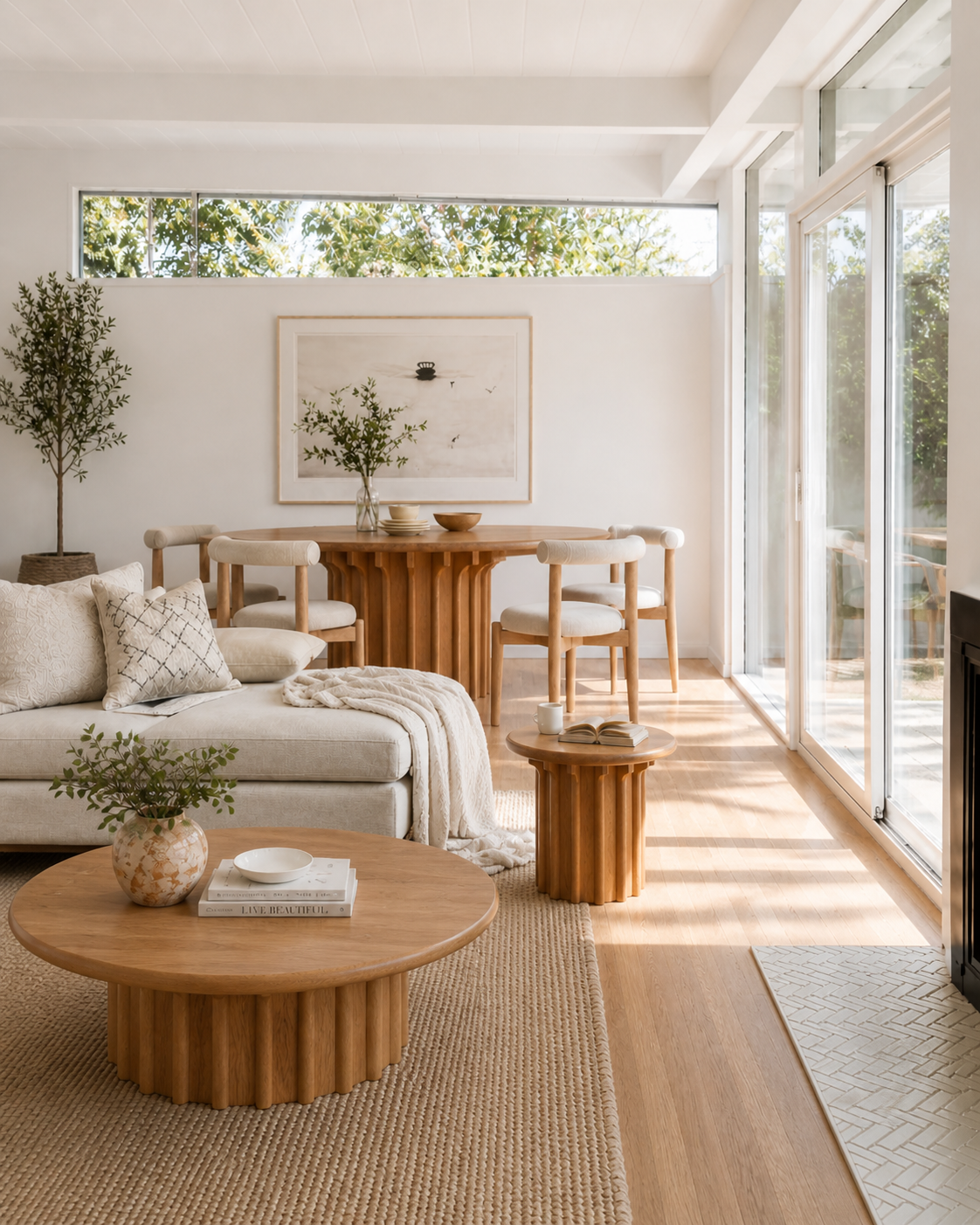
Open-plan living has changed the way many homes are designed. Rather than separating the kitchen, dining room, and living room with walls, these spaces often share one continuous layout.
This creates a sense of openness and makes it easier for family members and guests to interact. However, it also means that individual furniture choices have a greater influence on how the entire space looks and functions.
The dining table is particularly important. It establishes a place for meals and gatherings while helping define the transition between cooking, dining, and relaxing.
Choosing the right dining table for an open-plan living space involves more than finding a style you love. It requires considering how the table connects the different areas of your home and supports the way you live.

Define the Dining Area Without Closing Off the Space
One of the main challenges of open-plan design is creating distinct functional areas without interrupting the sense of openness.
A dining table can provide a natural visual boundary between the kitchen and living room. Its position helps establish where dining takes place, even when there are no walls or partitions.
Start by considering the relationship between the dining area and the kitchen. Placing the table within convenient reach of the kitchen makes serving meals easier, while positioning it near the living area can encourage conversation between people cooking, dining, and relaxing.
The table should feel connected to both spaces without obstructing either one.
A well-positioned dining table gives the room structure while preserving the flexibility that makes open-plan living appealing.
Choose a Table Shape That Suits Your Layout
The shape of a dining table influences how it fits into an open-plan interior and how people move around it.
Rectangular Dining Tables
Rectangular tables are well suited to elongated dining areas or layouts where the dining space runs alongside a kitchen island. Their shape can reinforce the direction of the room and provide generous seating for everyday meals and larger gatherings.
They are also practical when a dining area needs to accommodate several people without extending too far into the living space.
Round Dining Tables
Round tables can work particularly well in compact or square dining zones. Without corners, they can make circulation around the table feel more natural, depending on the surrounding layout.
They also create an inviting arrangement for conversation, with everyone seated around a shared center.
Square Dining Tables
Square tables can suit more compact, symmetrical dining areas. They offer a balanced arrangement for smaller households and can work especially well when the dining zone has a clearly defined footprint.
For larger square tables, consider the distance between the table and nearby furniture to ensure the space remains comfortable to use.
The best shape is the one that works with your actual floor plan rather than simply following a design trend.
Measure the Space for Comfortable Movement
An open-plan room can look spacious while still having limited usable space around the dining table.
Before choosing a table, measure the available dining area and account for the chairs, not just the tabletop.
As a general starting point, aim for approximately 36 inches of clearance around the table where possible. This can provide room to pull out chairs and move through the dining area, although more space may be needed along busy walkways or behind frequently used seating.
If the table sits beside a kitchen island, measure the combined space required for island seating, dining chairs, and everyday circulation.
Remember to consider how the room functions when everyone is using it. A layout that works when the chairs are pushed in may become inconvenient during meals.
Taking these measurements early can help prevent a beautiful dining table from becoming an obstacle in the room.
Consider How the Dining Table Will Be Used
The right dining table should support more than its primary purpose.
In many homes, the dining table also becomes a place to work, read, help children with homework, or host friends. These different activities influence the size, surface, and overall design that will work best.
For everyday family meals, a table with comfortable seating and a practical surface may be the priority. For frequent entertaining, a larger table or an extendable design may offer greater flexibility.
If the table doubles as a workspace, consider whether its dimensions allow enough room for laptops, documents, and other everyday items without making dining uncomfortable.
Think about your routines before making a decision. A table that supports several aspects of daily life can become one of the most useful pieces in an open-plan home.
Create a Connection Between the Dining and Living Areas
Because open-plan interiors bring several functions together, furniture in one area inevitably affects the appearance of another.
The dining table does not need to match the living room furniture exactly. Instead, look for elements that create a natural connection between the two areas.
This might come from related finishes, complementary colors, similar forms, or a consistent approach to design.
For example, a dining table with a clean, architectural silhouette can work alongside a relaxed sofa and a sculptural coffee table. The pieces can differ in shape and function while maintaining a shared visual character.
Lighting can also help distinguish the dining area. A pendant light centered above the table establishes a focal point and creates a sense of definition without requiring a physical divider.
The objective is to make the dining and living areas feel related while allowing each to serve its own purpose.
Think About the Table Base as Well as the Top
When comparing dining tables, it is easy to focus on the tabletop dimensions and finish. However, the base can influence both seating flexibility and the way the table fits into the room.
A table with four corner legs may have a familiar, structured appearance, but the leg positions can affect where chairs fit comfortably.
A central pedestal base can provide more flexibility for seating, depending on its design and dimensions. Other sculptural bases may introduce a distinctive architectural element to the dining area.
Consider the number of people you typically seat, the width of your chairs, and how easily everyone can move into and out of their seats.
The base should complement the overall design while supporting the practical needs of your household.
Let the Dining Table Anchor the Space
In an open-plan home, the dining table often becomes one of the largest and most visible furniture pieces.
Its presence can establish the character of the dining area, so consider how it relates to the room's lighting, flooring, cabinetry, and surrounding furniture.
A table with a strong silhouette can provide definition in a spacious interior. A more understated design may be appropriate when the kitchen or living room already contains prominent architectural features.
There is no need for every element to compete for attention. A considered combination allows the dining table to feel purposeful without overwhelming the rest of the room.
The most successful result is an interior in which the dining area feels naturally integrated into the larger home.
A Dining Table That Works With Your Home
Choosing a dining table for an open-plan living space is ultimately about finding the right relationship between layout, function, and design.
Consider how the table defines the dining area, how comfortably people can move around it, and how it connects with the kitchen and living room. Think about the activities it will support and the role it will play in your everyday routines.
A well-chosen dining table does more than provide a place to eat. It creates a gathering point that connects different parts of the home.
At Karhyn, we believe furniture should bring together thoughtful design and everyday functionality. When a dining table works naturally within its surroundings, it helps an open-plan interior feel more cohesive, welcoming, and ready for life.


