

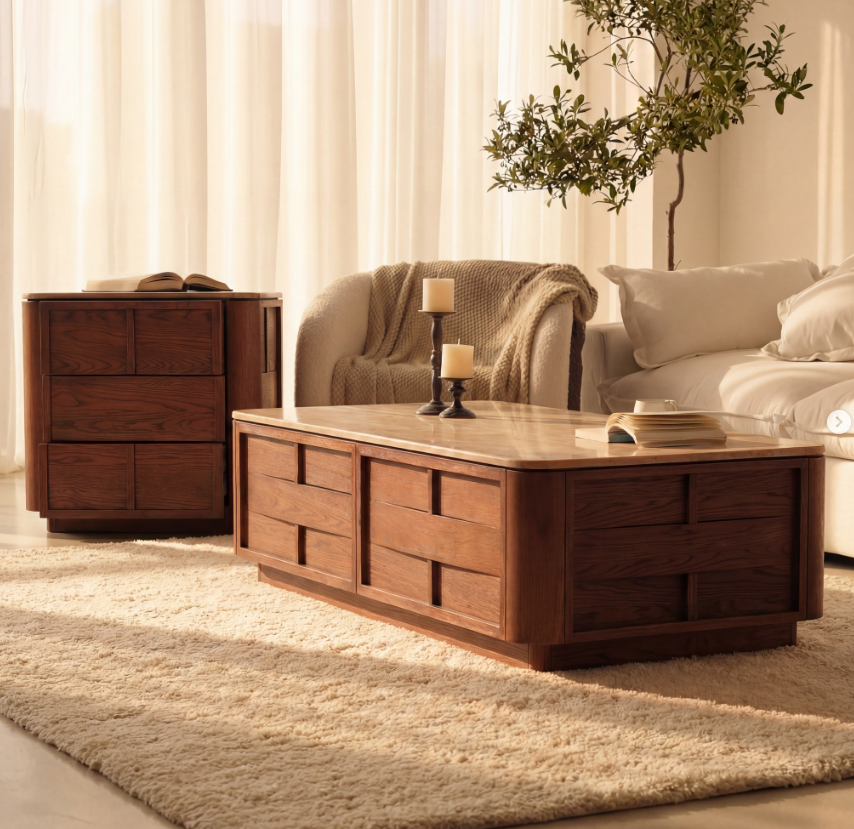
The living room is the most-used room in most homes. It is where you relax in the evening, where you gather with family. Where you host friends. It is also where the most things accumulate — remote controls, magazines, kids' toys, throw blankets, half-finished projects, and the clutter of daily life.
A living room that truly lives does not stay perfectly clean. It balances comfort, function, and a sense of ease. Here is how to create a space that feels welcoming, intentional, and genuinely lived-in.

Start with the Anchor
Every living room needs a visual anchor — the piece that grounds the space and gives it direction. Most often, that anchor is the sofa. But it can also be a large rug, a fireplace, or a statement piece of furniture.
Your anchor determines everything else. The coffee table should relate to it. The side tables should complement it. The art above it should feel connected.
If you are starting from scratch, choose your anchor first. If you already have one, let it guide the rest of your decisions. A room without a clear anchor can feel scattered and unsettled.
Choose the Right Coffee Table
The coffee table is the functional center of the living room. It holds your cups, your books, your remote controls, and sometimes your feet. Getting it right makes a significant difference in how the room feels.
A coffee table should be proportional to your seating — roughly two-thirds the length of your sofa. It should sit at a height that is comfortable to reach from a seated position, usually one to two inches lower than your sofa cushions.
The shape matters too. A round or oval table softens a room full of straight lines. A rectangular table provides more surface area for larger spaces. Choose the shape that complements your seating arrangement.
Layer Your Lighting
One overhead light is rarely enough for a living room. A well-lit space has layers of light that can be adjusted for different activities and moods.
Start with ambient light — the general illumination that fills the room. This might be an overhead fixture, recessed lights, or a large floor lamp.
Add task lighting for specific activities. A reading lamp next to a chair. A small lamp on a side table for close-up tasks.
Finish with accent lighting to create warmth and depth. A floor lamp that casts light upward. A small table lamp with a warm bulb. Candles on the coffee table.
The ability to dim your lights is invaluable. Bright light for cleaning or working. Soft light for relaxing in the evening. The same room can feel entirely different with a simple adjustment.
Pay Attention to Traffic Flow
A beautiful living room is useless if you cannot walk through it comfortably. Traffic flow is one of the most overlooked aspects of living room design.
Leave at least 30 inches of walking space between furniture pieces. The path from the entryway to the seating area should be clear. The route to the kitchen or hallway should not require weaving around obstacles.
If you have to squeeze past the coffee table to reach the sofa, the room is arranged incorrectly. Sometimes the best design decision is not what you add, but what you move.
Add Texture, Not Just Color
Color gets all the attention, but texture is what makes a room feel layered and warm. A room with the right textures can be calming even with a neutral palette.
Mix materials. A leather armchair alongside a linen sofa. A wool rug under a wooden coffee table. A ceramic vase on a stone surface. These contrasts create visual interest without relying on bold colors.
Texture also affects how a room feels physically. Soft textures invite touch and relaxation. Smooth textures feel clean and modern. The best living rooms have a balance of both.
Keep Surfaces Clear
Clutter is the enemy of calm. And no room collects clutter faster than the living room.
The coffee table should have room for a cup and a book, but not much else. Side tables should hold a lamp and maybe one small object. Shelves should display only what you truly want to see.
The goal is not minimalism for its own sake. It is intention. Every object in the room should have a reason for being there. If it does not, it is clutter. And clutter makes a room feel smaller, busier, and less restful.
Create a Conversation Area
Living rooms are for gathering. The seating arrangement should support conversation.
Arrange sofas and chairs so that people can see each other comfortably. A sofa facing a pair of chairs works well. Two sofas facing each other creates a more intimate setting. Avoid placing all seating in a line facing one direction — that arrangement discourages interaction.
The distance between seats should be close enough for conversation but not so close that people feel crowded. Four to eight feet between seating is usually comfortable.
A Room That Truly Lives
A living room that truly lives is not a showroom. It does not look untouched. It shows signs of use — a book left open on the coffee table, a throw blanket draped over the arm of a chair. These small signs of life are what make a room feel like home.
The goal is not perfection. It is a space that welcomes you at the end of the day, supports your daily routines, and adapts to the people who use it.
Explore the Karhyn collection for pieces that bring warmth and structure to your living room.


