

A sideboard does more than add storage to a dining room. It helps shape the way the room feels, functions, and flows. The right piece can bring balance to the space, offer practical everyday storage, and create a natural surface for serving, styling, or display.
Choosing the right sideboard is not only about style. It is also about proportion, storage needs, materials, and how the piece works within the overall room. Here is what to consider when selecting a sideboard for your dining space.
|
Recommended Height |
Recommended Depth |
Clearance in Front |
|
30–34 in |
18–22 in |
About 30 in |
1. Start with Proportion
A sideboard should feel visually connected to the room rather than too large or too small for it. In most dining rooms, the sideboard should not visually overpower the dining table. In larger spaces, a wider piece—often around 80 inches or more—can help anchor the layout and create a stronger sense of balance.
Height also matters. Most sideboards fall between 30 and 34 inches high, which works well with standard dining table proportions and helps keep the room feeling open. Depth is usually kept within 18 to 22 inches, offering useful storage without taking up too much circulation space.
It is equally important to leave enough clearance in front. Around 30 inches of open space allows doors to open comfortably and makes movement around the room easier. A well-sized sideboard should support the layout, not compete with it.
2. Think About How You Will Use the Storage
A beautiful sideboard is only truly useful if the storage inside works for the way you live. Some households need space for dinnerware, serving bowls, trays, and table linens, while others may use a sideboard more for occasional entertaining or display.
Adjustable shelves offer flexibility, especially when storing items of different heights. Fixed compartments can feel more structured and often provide better support for heavier pieces. Wider storage sections create a cleaner, simpler look, while multiple compartments can make organization easier.
When choosing a sideboard, think beyond total storage volume. Consider whether the interior layout matches what you actually need to store and how often you want to access it. Good storage should feel practical and effortless, not crowded or difficult to manage.
3. Choose Materials That Work Beautifully Over Time
Material plays a major role in both appearance and long-term performance. Solid wood sideboards, especially in oak, bring warmth, texture, and durability. They also age beautifully, developing more character over time. Engineered wood elements can add stability, especially in environments with changing humidity.
Stone tops such as travertine introduce contrast and a more elevated material feel. They are durable and visually rich, but they also require an understanding of their natural variation and porosity. Textured surfaces, slatted detailing, and carved accents can add depth and visual rhythm, though they may also require a little more care when cleaning.
The best material choice is not only about how a piece looks on day one, but how it will live in your home over time.
4. Consider the Design Language of the Piece
A sideboard can quietly blend into a room or become a subtle focal point, depending on its design. Even small differences in form, texture, and material contrast can shape the mood of the space.
Haven Sideboard: Calm and Understated
The Haven Sideboard is defined by clean lines, restrained detailing, and a quiet visual presence. It highlights the natural beauty of wood grain without relying on heavy ornamentation. This makes it especially suitable for interiors that value softness, clarity, and a sense of calm.

Vista Sideboard: Texture and Rhythm
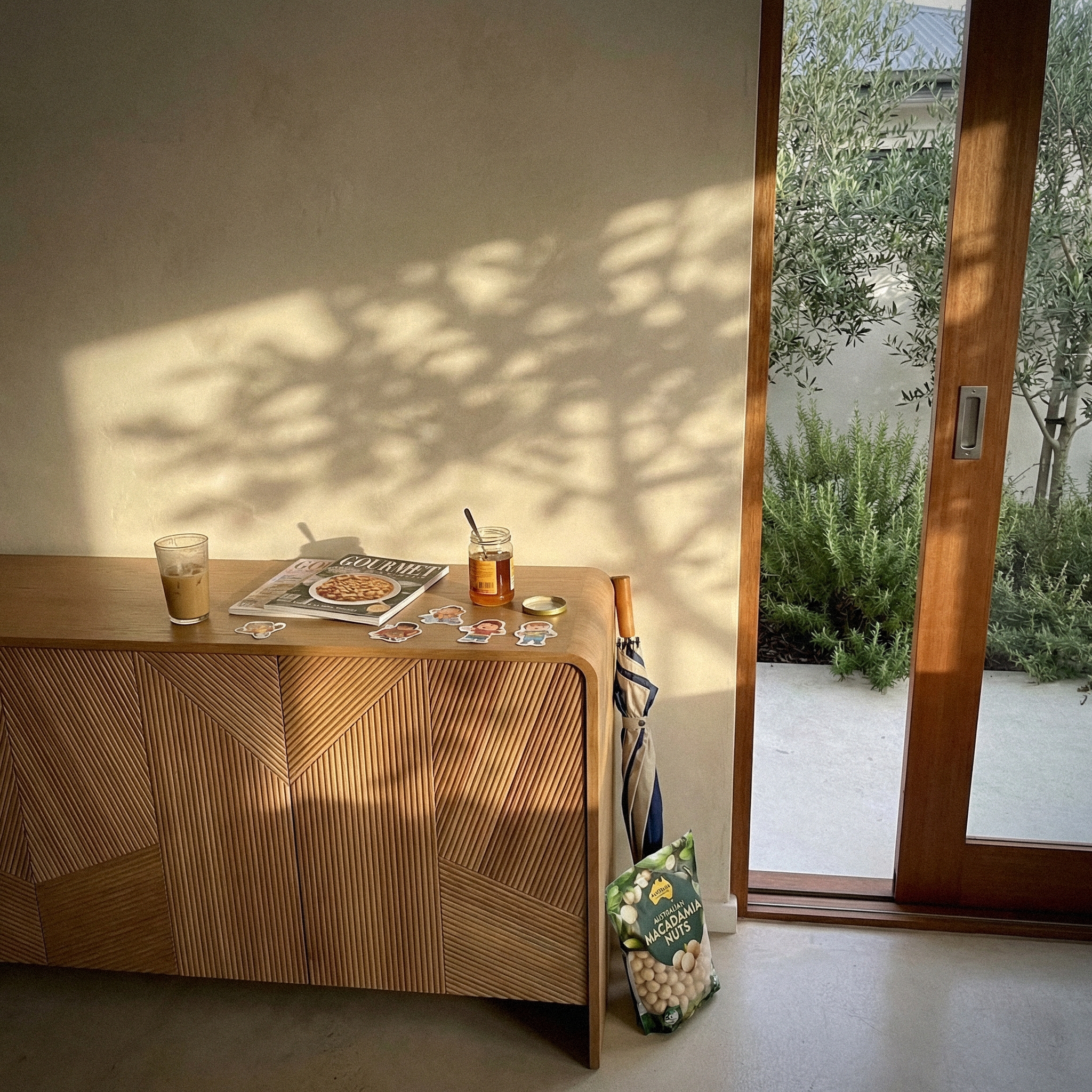
The Vista Sideboard brings more movement through its slatted detailing and layered surface expression. Light and shadow shift across the facade throughout the day, creating subtle depth. It works well in interiors that are otherwise simple and need one carefully controlled element of interest.

Hearth Sideboard: Warmth with Presence
The Hearth Sideboard combines solid wood with the richness of a stone top, often in travertine, to create a grounded and architectural feel. Its strength comes from material contrast and proportion rather than decoration. The result is a piece that feels warm, substantial, and quietly refined.

5. Think Beyond the Dining Room
Although sideboards are traditionally used in dining rooms, they also work beautifully in other parts of the home. In a living room, a sideboard can serve as a media console or display surface. In an entryway, it can help organize daily essentials while creating a polished first impression.
No matter where it is placed, the same principles apply. It should align naturally with the architecture of the room, avoid interrupting movement, and relate well to what sits above it—whether that is artwork, a mirror, or lighting. A sideboard feels most successful when it is part of a thoughtful composition rather than an isolated piece.
6. Choose with Intention
The right sideboard is one that fits your space, supports your daily routines, and feels visually at home in the room. Size, storage, materials, and design should all work together.
For a softer and more understated look, Haven offers quiet simplicity. For more texture and visual rhythm, Vista adds subtle movement. For a more grounded and material-rich presence, Hearth brings warmth and depth.
A well-chosen sideboard may not be the loudest piece in the room, but it often becomes one of the most useful. Over time, it proves its value through balance, function, and the feeling it brings to everyday living.


