

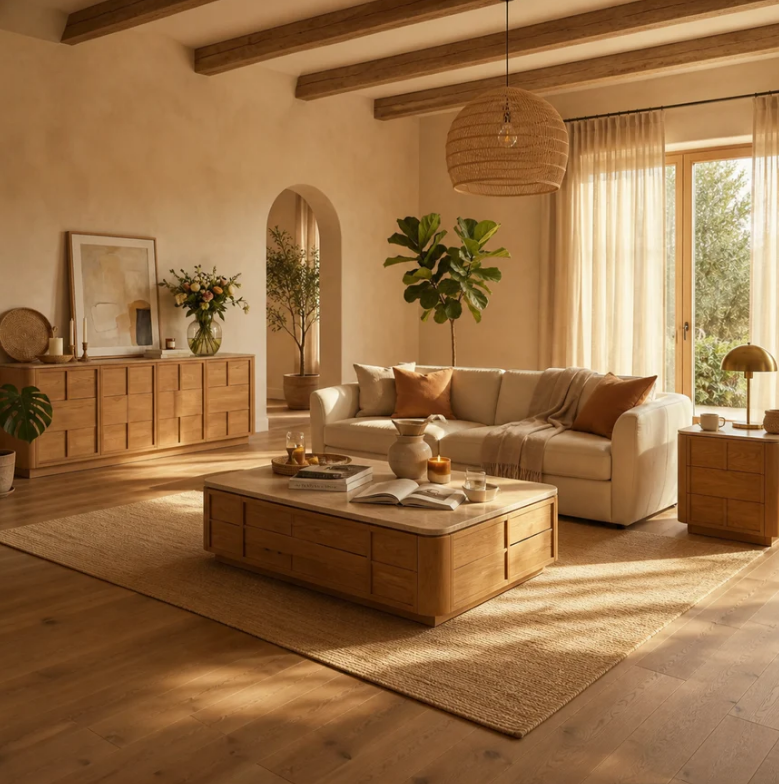
When shopping for furniture, you’ve probably noticed a wide range of prices for pieces that look similar. A dining table might cost $800 or $3,500 — and at first glance, they can appear almost identical.
The difference often comes down to one thing: how the wood is used.
Both solid wood and veneer have their place in furniture making. And there’s a third option — a hybrid approach that combines the best of both. Understanding these differences helps you make the right choice for your home, your budget, and how you live.
Here’s what you need to know.

What Is Solid Wood?
Solid wood furniture is made entirely from natural lumber — cut directly from a tree, with no composite materials or fillers. Every piece is unique, with its own grain patterns, texture, and natural variation.
Key characteristics:
-
Durable. Solid wood is built to last for decades, even generations.
-
Refinishable. It can be sanded and restained multiple times — scratches and wear can be repaired rather than replaced.
-
Natural beauty. The grain is authentic and one-of-a-kind. No two pieces look exactly alike.
-
Heavier and more substantial.
Trade-offs:
-
Higher upfront cost
-
Can expand or contract with humidity changes
-
Prone to warping or cracking in certain environments
-
Requires more careful climate control
Common solid woods include oak, walnut, maple, and cherry — each with its own color, grain, and character.
What Is Veneer?
Veneer furniture starts with a core material — usually plywood, MDF, or particleboard — and a thin layer of real wood is glued to the surface. This thin layer gives the piece the look of solid wood, but the construction is fundamentally different.
Key characteristics:
-
More affordable. Veneer uses less real wood, which keeps costs down.
-
Lightweight. Easier to move and transport.
-
Smooth, consistent finish. Veneer can create a uniform look that solid wood rarely offers.
-
Greater stability. The engineered core is less prone to warping, cracking, or expanding with humidity changes.
Trade-offs:
-
Cannot be refinished as deeply as solid wood
-
Thin top layer can chip or peel if damaged
-
Lower perceived "authenticity" for some buyers
The Hybrid Approach: Solid Wood Frame with Veneer
There is a third option that many high-end furniture makers choose: a solid wood frame with veneer panels.
In this construction, the structural parts of the piece — the legs, the frame, the edges — are made from solid wood. The larger flat surfaces — table tops, sideboard doors, cabinet panels — use high-quality veneer over a stable engineered core like plywood.
Why this combination works:
-
Strength where it matters. The solid wood frame provides durability and structural integrity.
-
Stability where it's needed. The veneer panels resist warping and cracking — especially important for large surfaces.
-
Beautiful grain across large areas. Veneer allows for matched, consistent grain patterns that solid wood alone cannot achieve on wide panels.
-
Lighter weight. Easier to move and handle.
-
More accessible pricing. Less solid wood means lower cost, without sacrificing quality.
Many of the world’s most respected furniture brands use this approach. It’s not a shortcut — it’s a design decision based on performance, aesthetics, and longevity.
The Real Difference: What You're Paying For
Solid Wood:
-
100% natural wood throughout
-
Lasts decades, can be refinished multiple times
-
Heavier, more substantial
-
Higher initial investment
-
Susceptible to warping with humidity changes
Veneer (on engineered core):
-
Thin real wood layer on stable core
-
More affordable upfront
-
Lighter, easier to move
-
More stable — resistant to warping and cracking
-
Cannot be sanded down heavily
Solid Wood Frame + Veneer (Hybrid):
-
Solid wood for structure, veneer for surfaces
-
Best of both worlds: strength + stability
-
Matched grain patterns on large surfaces
-
High-end craftsmanship at a more accessible price
-
Used by many premium furniture brands
Which One Is Right for You?
Choose solid wood if:
-
You want a piece that can be heavily refinished over time
-
You value the authenticity and uniqueness of natural wood
-
You're willing to manage humidity levels in your home
-
You're looking for a true heirloom piece
Choose veneer if:
-
You're working with a tighter budget
-
You prefer a cleaner, more consistent finish
-
You want the look of real wood without the weight
-
You need a piece that is highly stable in varying climates
Choose the hybrid approach (solid frame + veneer) if:
-
You want the structural integrity of solid wood where it matters
-
You value stability on large surfaces
-
You want a piece that balances quality, longevity, and value
-
You appreciate thoughtful, intentional design
How to Tell the Difference Before You Buy
1. Check the edges. Solid wood grain continues seamlessly from the surface to the edges. Veneer often shows a separate top layer. On a hybrid piece, the edges (frame) will be solid wood, while large flat surfaces will show veneer.
2. Look at the grain pattern. Solid wood has natural, varied grain. Veneer often shows matched, consistent patterns — which is actually a sign of quality, not a flaw.
3. Test the weight. Solid wood is heavier. Hybrid and veneer pieces are lighter but still substantial if well-made.
4. Read the product description carefully. Good brands are transparent about their construction. If a piece says "solid wood frame with veneer," that's a sign of honest craftsmanship.
The Truth About Veneer
There's a common misconception that veneer means "cheap" or "fake." That's simply not true.
Veneer is real wood — just applied in a thin layer over a stable core. Many of the world's most iconic furniture designs — including pieces by mid-century masters like Charles and Ray Eames, George Nelson, and Arne Jacobsen — used veneer. It wasn't a cost-cutting shortcut. It was a design decision.
Veneer allows for cleaner lines, more stable surfaces, and consistency in grain that solid wood alone cannot achieve on larger panels. It's also more sustainable, because one tree can produce far more veneer than solid lumber.
The difference between good and bad veneer comes down to quality — the thickness of the wood layer, the stability of the core, and the care taken in application.
How We Build at Karhyn
At Karhyn, we use a hybrid construction: solid white oak frames with high-quality veneer panels.
The solid oak frame — visible in the legs, edges, and structural elements — gives each piece strength, durability, and the warmth of real wood. The veneer surfaces allow us to achieve clean, consistent grain across tabletops and cabinet panels — without the risk of warping or cracking that comes with solid wood on large surfaces.
This isn't a compromise. It's a deliberate choice — one that balances longevity, stability, and design precision. It's how we create pieces that are built to last, designed to be lived with, and crafted with care.
Looking to learn more about why we choose the materials we do? Start there.


