

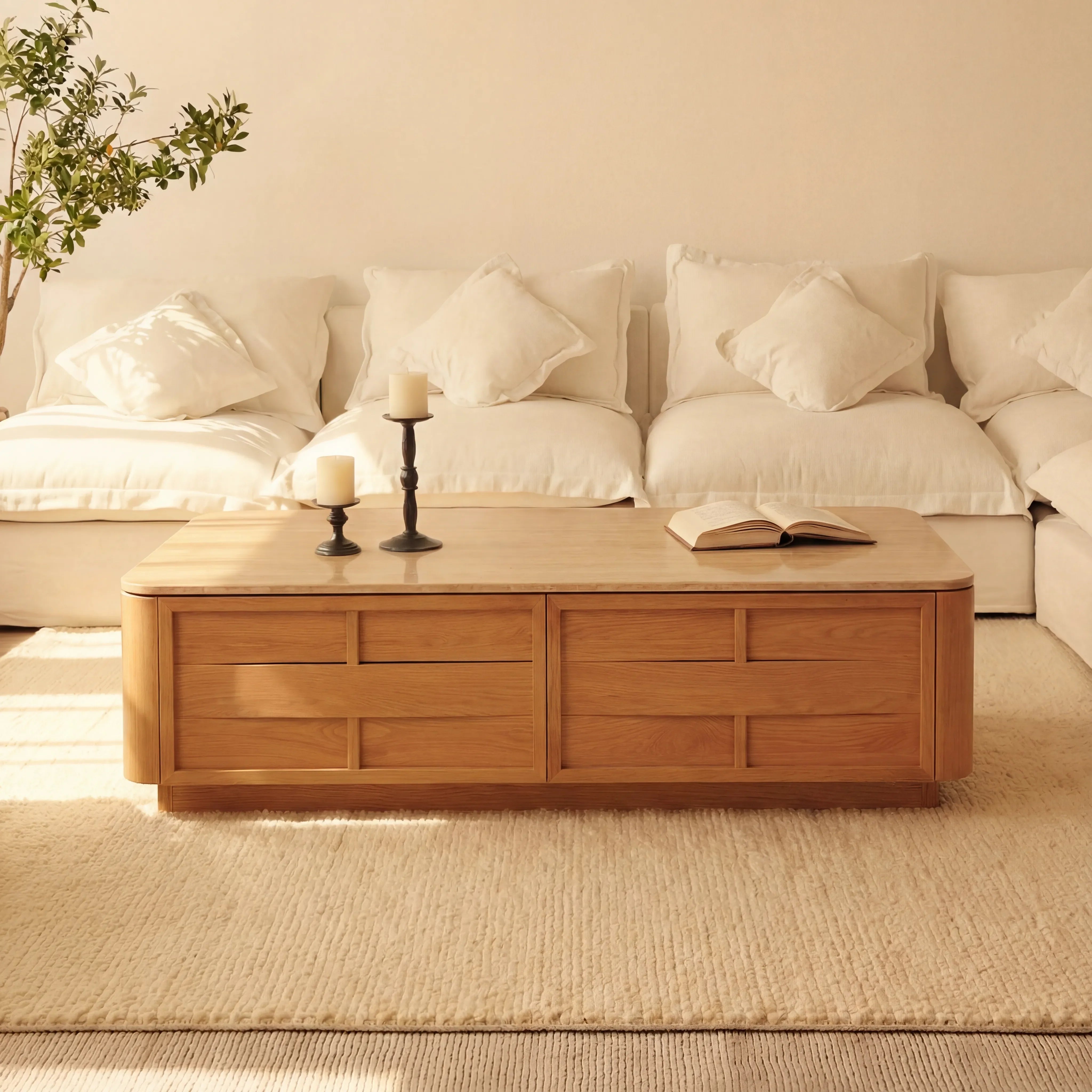
Choosing a coffee table is not only about style. The material you choose affects how the piece looks, feels, ages, and performs in everyday life.
From morning coffee and quiet reading moments to movie nights, family gatherings, and homes with children or pets, a coffee table often becomes one of the most frequently used pieces in the living room. That is why material matters.
This guide breaks down the most common coffee table materials, including solid wood, MDF, metal, stone, and wood-and-stone combinations, so you can choose the right coffee table for your space, lifestyle, and long-term needs.

1. Solid Wood Coffee Tables: Timeless, Natural, and Built to Last
Solid wood coffee tables, especially oak coffee tables and walnut coffee tables, remain a classic choice for good reason. They bring natural warmth, visible grain, and a sense of permanence to the living room.
Unlike synthetic materials, solid wood has character. Each piece carries its own grain pattern, tone variation, and natural texture, making every table feel slightly unique.
Pros of solid wood coffee tables
Strong, durable, and long-lasting
Natural wood grain adds warmth and depth
Works with many interior styles, from modern organic to rustic
Can often be refinished or restored over time
Ages beautifully with proper care
Cons of solid wood coffee tables
Usually more expensive than engineered wood
Requires basic care to avoid moisture, heat marks, and scratches
Natural wood may change slightly with temperature and humidity
Best for
Solid wood coffee tables are ideal for homeowners who want a long-term, high-quality piece that feels warm, natural, and timeless.
2. MDF Coffee Tables: Affordable and Easy to Style
MDF coffee tables are commonly used in affordable and contemporary furniture. MDF has a smooth surface, which makes it suitable for painted finishes and clean, simple shapes.
For short-term use or budget-conscious spaces, MDF can be a practical option.
Pros of MDF coffee tables
More affordable than solid wood
Smooth surface for painted or lacquered finishes
Lightweight and easy to move
Available in many styles and colors
Cons of MDF coffee tables
Less durable than solid wood
More sensitive to moisture and damage
Difficult to repair once chipped or swollen
Usually has a shorter lifespan
Best for
MDF coffee tables are best for apartments, rental homes, guest rooms, or short-term furniture needs where budget and flexibility are the main priorities.
3. Metal Coffee Tables: Clean, Modern, and Structural
Metal coffee tables are often used in modern, industrial, and minimalist interiors. They can create a clean, architectural look and are usually strong and easy to maintain.
Metal is also frequently combined with other materials, such as glass, wood, or stone, to add structure and contrast.
Pros of metal coffee tables
Strong and stable
Easy to clean
Works well in modern and industrial spaces
Often visually light when designed with slim frames
Cons of metal coffee tables
Can feel cold or hard visually
May scratch over time
Some finishes may show fingerprints or wear
Not always ideal for warm, natural interiors
Best for
Metal coffee tables work well in minimalist, industrial, or contemporary homes where clean lines and structure are part of the design language.
4. Stone Coffee Tables: Elegant, Durable, and High-End
Stone coffee tables are often chosen for their premium appearance and natural beauty. Materials such as marble, travertine, limestone, and granite can instantly elevate a living room.
Marble coffee tables offer a refined and polished look, while travertine coffee tables bring a softer, warmer, and more organic feeling. Travertine is especially loved for its beige tones, natural pores, and quiet texture, making it a strong choice for modern organic, wabi-sabi, and warm minimalist interiors.
Pros of stone coffee tables
Premium and elegant appearance
Naturally durable and long-lasting
Heat-resistant compared with many other materials
Unique veining, texture, and natural variation
Travertine adds warmth and softness to the room
Cons of stone coffee tables
Heavy and difficult to move
Usually more expensive
Some stone surfaces require sealing and proper care
Porous stones, such as travertine, need protection from stains and spills
Best for
Stone coffee tables are best for design-focused homes, luxury interiors, and spaces where the coffee table is meant to serve as a visual centerpiece.
5. Wood and Stone Coffee Tables: A Balance of Warmth and Refinement
For many modern homes, the most balanced option is a coffee table that combines wood and stone.
A solid wood base brings warmth, texture, and natural grounding, while a stone top adds elegance, durability, and visual interest. This combination works especially well with oak and travertine, creating a look that feels refined but still comfortable.
Common design combinations
Solid oak base with travertine top
Solid wood frame with marble surface
Wood pedestal base with natural stone tabletop
Pros of wood and stone coffee tables
Combines the warmth of wood with the elegance of stone
Feels natural, elevated, and design-forward
Works well with modern organic, wabi-sabi, Nordic, and quiet luxury interiors
Stone top adds durability for daily use
Travertine softens the overall look with natural texture and warm tones
Cons of wood and stone coffee tables
Usually higher in cost
Heavier than all-wood or MDF tables
Stone surfaces require proper care and stain protection
Quality depends heavily on material selection and construction
Best for
Wood and stone coffee tables are ideal for homeowners who want a coffee table that feels both practical and elevated — warm enough for everyday living, but refined enough to anchor the room.
How to Choose the Right Coffee Table Material
The best coffee table material depends on how you live and how you want your space to feel.
If you want long-term durability and natural warmth, choose a solid wood coffee table.
If you want an affordable and flexible option, choose an MDF coffee table.
If you prefer a clean, modern, or industrial look, choose a metal coffee table.
If you want a high-end visual statement, choose a stone coffee table.
If you want a balance of warmth, function, and refined design, choose a wood and stone coffee table.
Key Questions Before Buying a Coffee Table
Before choosing a material, consider these questions:
Will this coffee table be used every day?
Do you need something long-term or temporary?
Do you have children or pets at home?
Will the surface often be exposed to drinks, snacks, books, or décor?
Do you prefer a warm natural look or a more polished luxury feel?
How much maintenance are you comfortable with?
These questions can help you avoid choosing a table based only on appearance and instead select a piece that truly fits your lifestyle.
Final Thoughts
There is no single best material for every coffee table. The right choice depends on your lifestyle, interior style, budget, and expectations for durability.
A well-designed coffee table should balance beauty, function, material quality, and everyday usability.
For homeowners who love natural warmth and lasting design, oak coffee tables and wood-and-stone coffee tables are especially strong choices. Their organic texture, quiet elegance, and durable construction make them well suited for modern living rooms.
At Karhyn, we design coffee tables with warm oak, natural stone, and thoughtful proportions to create pieces that feel grounded, refined, and made for real homes.
Explore Karhyn coffee tables to find oak and travertine designs that bring warmth, structure, and natural beauty into your living space.


