

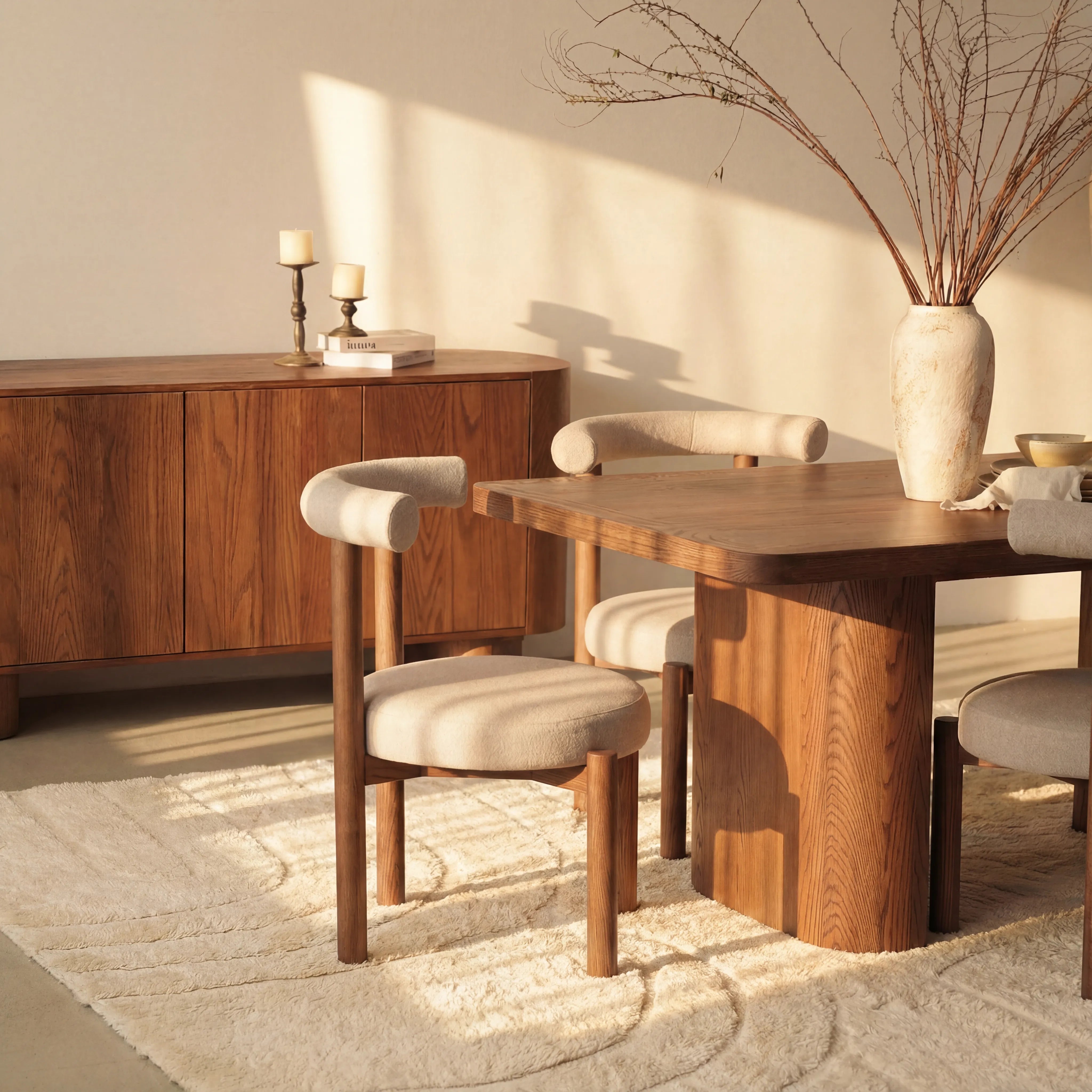
The environmental protection value of solid wood furniture is far superior to that of artificial panels, and its sustainability is reflected in three major links.In the procurement stage of raw materials, priority is given to wood certified by the FSC (Forest Stewardship Council) to ensure that it comes from legally felled and ecologically balanced forests, such as Nordic pine and North American black walnut.
In the production and processing process, environmentally friendly solid wood furniture adopts low-VOC (volatile organic compound) water-based paint or wood wax oil to reduce the release of harmful substances such as formaldehyde.
At the same time, the sawdust and scraps generated in the production process will be recycled and reused to make biomass fuels or composite sheets to reduce waste of resources.
In the waste recycling stage, solid wood furniture is easier to disassemble than wood-based panels, can be reprocessed into small pieces of furniture or decorations, and even generate energy through incineration (environmental protection standards must be met).
Choosing solid wood furniture is not only responsible for the current health, but also a commitment to the future environment.


